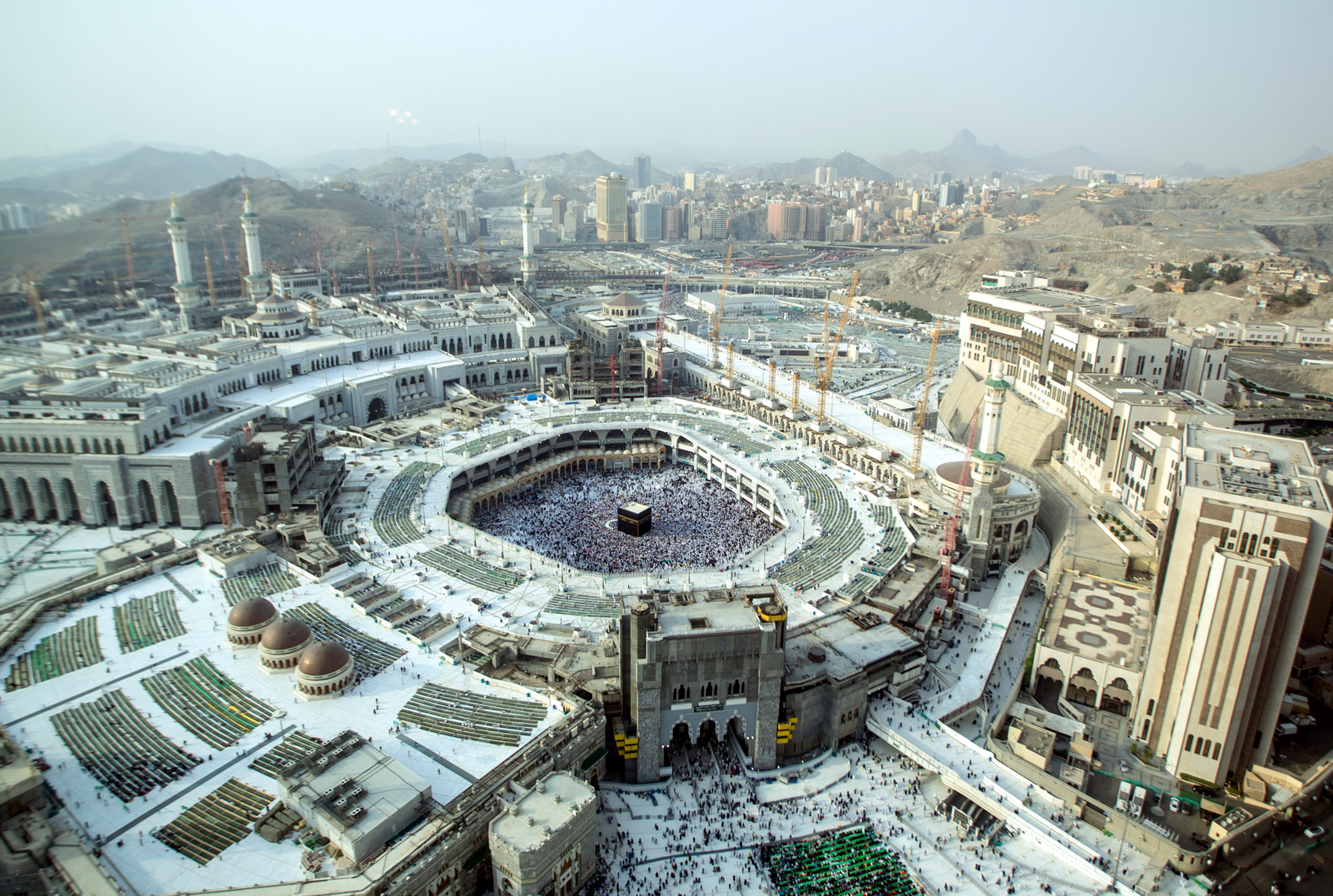
How to perform Umrah?
(With All Steps, Duʿāʾs, Miqāt Points, and Islamic Rulings)
1. WHAT IS ʿUMRAH?
ʿUmrah is a sacred pilgrimage to Makkah al-Mukarramah that can be performed at any time of the year, unlike Ḥajj which has fixed dates.
Pillars (Arkān) of ʿUmrah (according to the majority of scholars):
- Ihrām
- Ṭawāf
- Saʿy
- Shaving or trimming the hair
Without these, ʿUmrah is invalid.
2. MIQĀT (ENTRY POINTS FOR IHRĀM)
(These are often incorrectly referred to as “gates”)
❗ It is ḥarām to cross the Miqāt without entering Ihrām if you intend ʿUmrah
The Five Official Miqāt Locations:
1. Dhū al-Ḥulayfah (Abyār ʿAlī)
- For people coming from Madīnah
- Distance: ~450 km from Makkah
2. Al-Juhfah
- For people coming from Shām (Syria), Egypt, North Africa
- Today people use Rābigh instead
3. Qarn al-Manāzil
- For people coming from Najd (Riyadh, central Arabia)
- Modern name: As-Sayl al-Kabīr
4. Yalamlam
- For people coming from Yemen and the Indian subcontinent
- Used by pilgrims from South Asia
5. Dhāt ʿIrq
- For people coming from Iraq
✈️ By Air:
- You must enter Ihrām before crossing the Miqāt in the air
- Airlines announce it before reaching Miqāt
3. IHRĀM: ENTERING THE SACRED STATE
A. Physical Preparation (Sunnah)
- Trim nails
- Remove unwanted hair
- Perform ghusl (full bath)
- Apply perfume before Ihrām only
B. Clothing
For Men:
- Two unstitched white cloths:
- Izār (lower garment)
- Ridāʾ (upper garment)
- No stitched clothing
- No head covering
For Women:
- Any modest clothing
- No face veil (niqāb)
- No gloves
C. Intention (Niyyah)
Arabic:
لَبَّيْكَ اللَّهُمَّ عُمْرَةً
Transliteration:
Labbayka Allāhumma ʿUmrah
English:
“O Allah, here I am responding to Your call to perform ʿUmrah.”
D. Talbiyah (Recited aloud by men, softly by women)
Arabic:
لَبَّيْكَ اللَّهُمَّ لَبَّيْكَ،
لَبَّيْكَ لَا شَرِيكَ لَكَ لَبَّيْكَ،
إِنَّ الْحَمْدَ وَالنِّعْمَةَ لَكَ وَالْمُلْكَ،
لَا شَرِيكَ لَكَ
English Meaning:
“Here I am, O Allah, here I am.
You have no partner, here I am.
Indeed all praise, blessings, and sovereignty belong to You.
You have no partner.”
🟢 Continue Talbiyah until Ṭawāf begins
4. ENTERING MAKKAH & MASJID AL-ḤARĀM
Important Clarification About “Gates”
Masjid al-Ḥarām has over 100 gates, which change due to expansions.
Islamically:
- Entering from any gate is valid
- No gate is obligatory
Well-Known Gates (for orientation only):
- Bāb as-Salām (Gate of Peace)
- King ʿAbdulʿAzīz Gate
- King Fahd Gate
- Bāb al-ʿUmrah
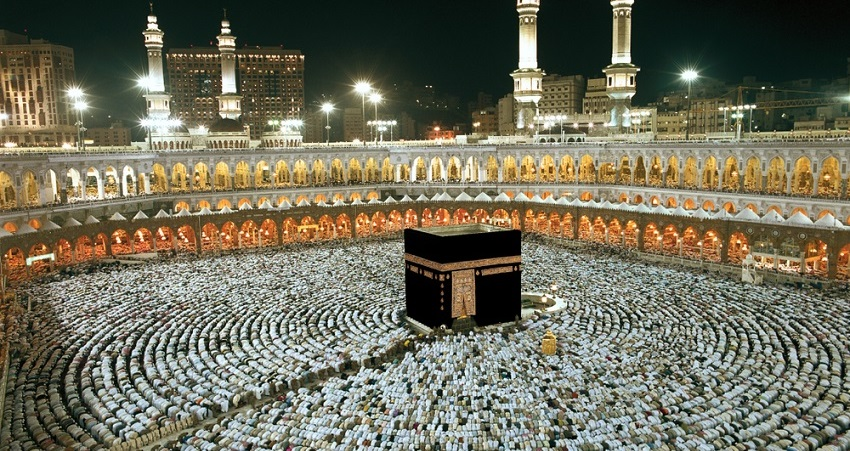
Duʿāʾ When Entering the Masjid
Arabic:
اللَّهُمَّ افْتَحْ لِي أَبْوَابَ رَحْمَتِكَ
English:
“O Allah, open for me the doors of Your mercy.”
5. ṬAWĀF (CIRCUMAMBULATION OF THE KAʿBAH)
Conditions:
- In state of wuḍūʾ
- Covering ʿawrah
- Seven complete circuits
- Kaʿbah on your left
- Men need to uncover their right shoulder
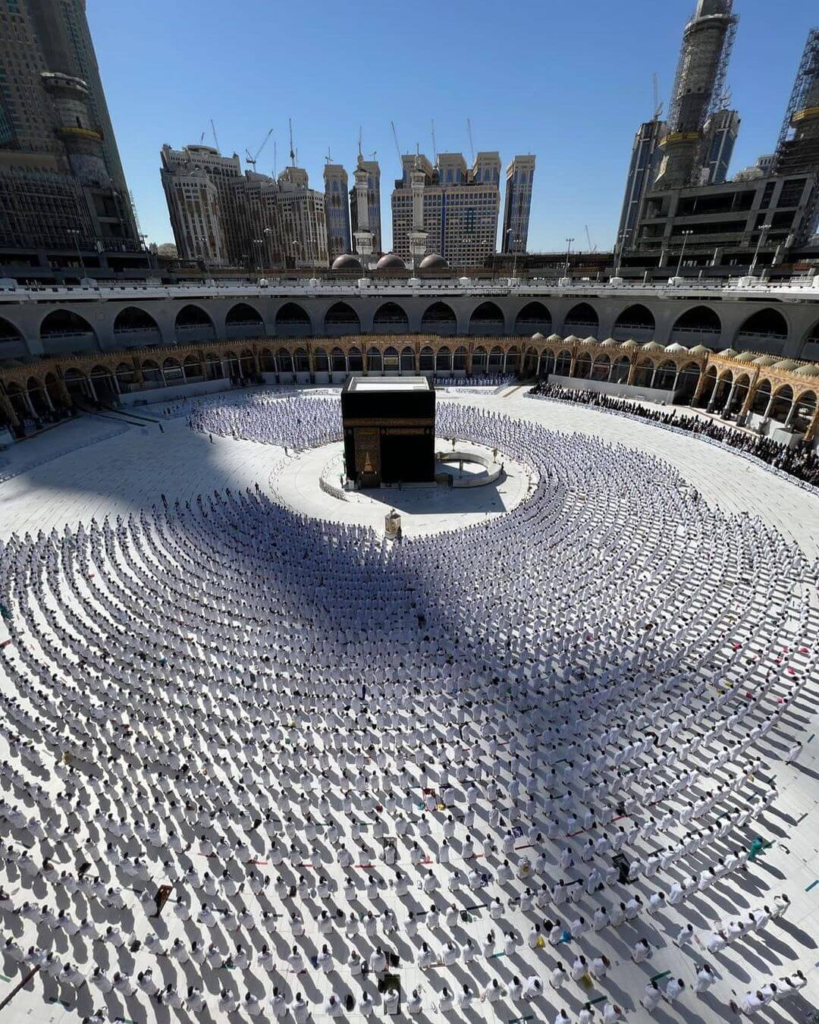
Starting Point: Ḥajar al-Aswad (Black Stone)
If possible:
- Kiss it
If not:
- Touch it with hand
- Or point and say:
Arabic:
بِسْمِ اللَّهِ، اللَّهُ أَكْبَر
Green lights mark the start of the tawaf if you are unable to see the Ḥajar al-Aswad.
After each round raise your hand towards Ḥajar al-Aswad and say بِسْمِ اللَّهِ، اللَّهُ أَكْبَر.
Raml (Men Only)
- First 3 rounds: brisk walk
- Last 4 rounds: normal walking
Duʿāʾ During Ṭawāf
There is no fixed duʿāʾ except between Yamānī Corner and Black Stone:
It is permissible to ask any dua during the tawaf in Arabic or any other language.
Arabic:
رَبَّنَا آتِنَا فِي الدُّنْيَا حَسَنَةً
وَفِي الْآخِرَةِ حَسَنَةً
وَقِنَا عَذَابَ النَّار
English:
“Our Lord, grant us good in this world and good in the Hereafter and protect us from the punishment of the Fire.”
After Ṭawāf:
- Pray 2 rakʿah behind Maqām Ibrāhīm (if possible)
- otherwise pray any where in the mataf with the intention that you are praying behind Maqām Ibrāhīm
Recite:
- First rak’ah: Sūrah al-Kāfirūn
- Second rak’ah: Sūrah al-Ikhlāṣ
6. DRINKING ZAMZAM
Duʿāʾ:
Arabic:
اللَّهُمَّ إِنِّي أَسْأَلُكَ عِلْمًا نَافِعًا، وَرِزْقًا وَاسِعًا، وَشِفَاءً مِنْ كُلِّ دَاء
English:
“O Allah, I ask You for beneficial knowledge, abundant provision, and cure from every illness.”
7. SAʿY (BETWEEN ṢAFĀ AND MARWAH)
Starting at Ṣafā
Arabic:
إِنَّ الصَّفَا وَالْمَرْوَةَ مِن شَعَائِرِ اللَّهِ
English:
“Indeed Ṣafā and Marwah are among the symbols of Allah.”
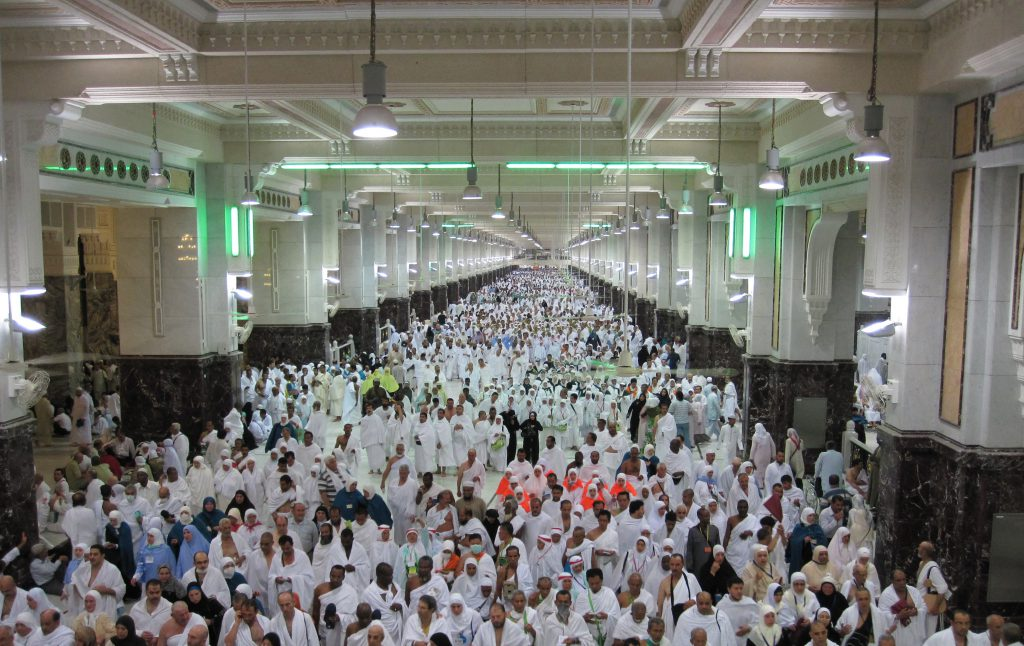
Duʿāʾ on Ṣafā and Marwah:
Raise hands and say three times:
Arabic:
اللَّهُ أَكْبَر، اللَّهُ أَكْبَر، اللَّهُ أَكْبَر
لَا إِلٰهَ إِلَّا اللَّهُ وَحْدَهُ
لَهُ الْمُلْكُ وَلَهُ الْحَمْدُ
وَهُوَ عَلَىٰ كُلِّ شَيْءٍ قَدِير
Make personal duʿāʾ.
Walking Rules:
- Green lights area: men jog lightly
- Women walk normally
Seven trips total:
- Ṣafā → Marwah = 1
- Marwah → Ṣafā = 2
- End at Marwah
8. HALQ OR TAQSĪR (ENDING IHRĀM)
Men:
- Shaving head (ḥalq) is better
- Trimming (taqsīr) allowed
Women:
- Trim fingertip length only
At this point:
✅ ʿUmrah is COMPLETE
✅ All Ihrām restrictions lifted
9. IHRĀM PROHIBITIONS (VERY IMPORTANT)
While in Ihrām:
❌ No perfume
❌ No cutting hair or nails
❌ No hunting
❌ No marital relations
❌ No arguing or fighting
❌ Men: no stitched clothing, no head covering
❌ Women: no niqāb, no gloves
Violations may require fidya (penalty).
10. SPECIAL RULINGS
Women:
- ʿUmrah invalid during menstruation
- Can enter Ihrām but wait until pure for Ṭawāf
Children:
- Valid ʿUmrah
- Guardian makes intention for child
Elderly / Sick:
- Wheelchair allowed
- Someone may assist
11. COMMON MISTAKES TO AVOID
❌ Saying intentions aloud in groups
❌ Assigning specific duʿāʾs to each ṭawāf round
❌ Touching Kaʿbah excessively
❌ Pushing others
❌ Crossing Miqāt without Ihrām
12. SUMMARY CHECKLIST
✔ Ihrām from Miqāt
✔ Talbiyah
✔ Ṭawāf (7 rounds)
✔ 2 Rakʿah
✔ Zamzam
✔ Saʿy (7 trips)
✔ Hair trimming/shaving
